Canvas Credit Union — Employee Apparel Store
Rebuilding Canvas's Employee Apparel Program From the Ground Up
Role
Project Lead
Industry
Financial Services
Duration
2 Years
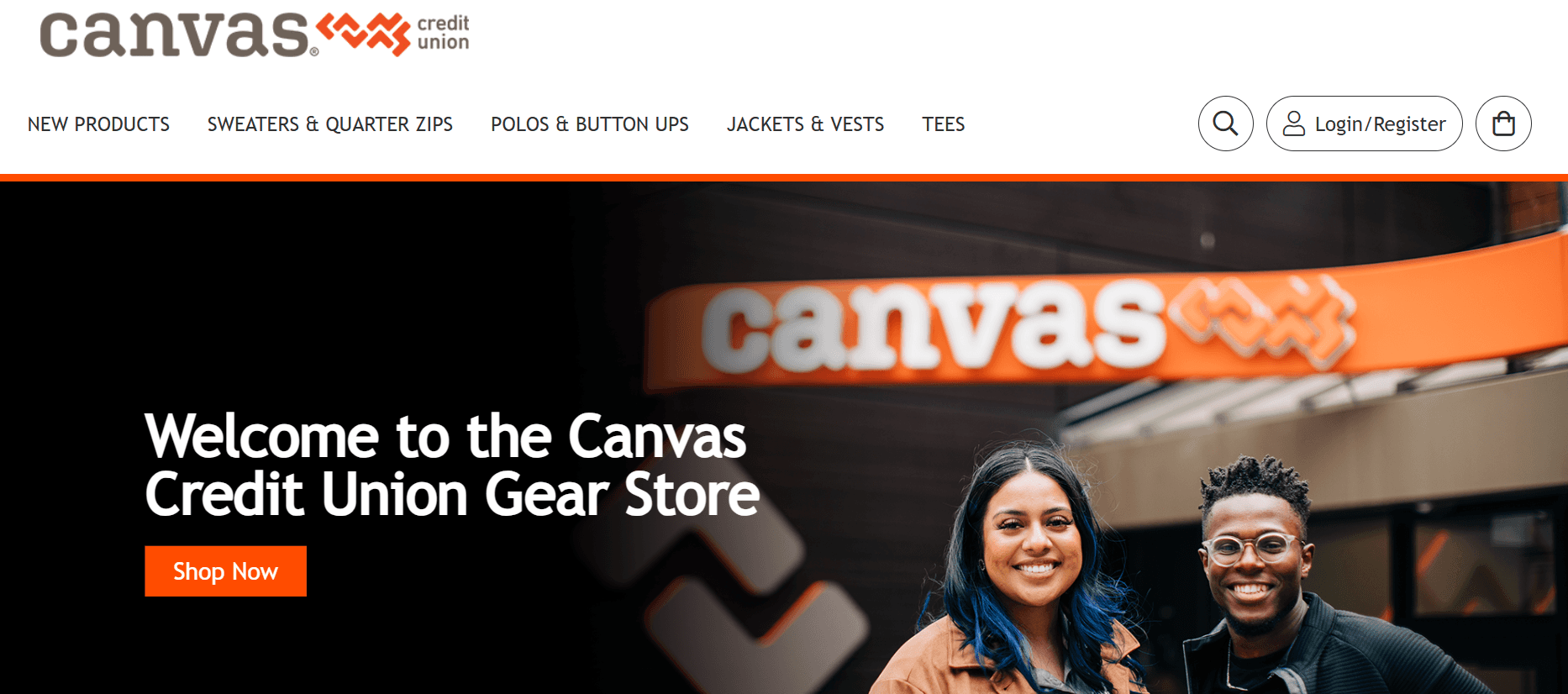
The Organization
Canvas Credit Union is one of Colorado's largest credit unions — a not-for-profit financial institution serving over 300,000 members across the Front Range with more than $3 billion in assets. Rooted in community and Colorado pride, Canvas operates with a distinct identity: not just a financial partner, but a reflection of the values and lifestyle of the people it serves.
I joined Canvas in 2021 as a Marketing Apprentice, working under the Head of Brand Management across partnerships, activations, and internal communications. This project became one of the longest and most formative of my time there.
The Brief
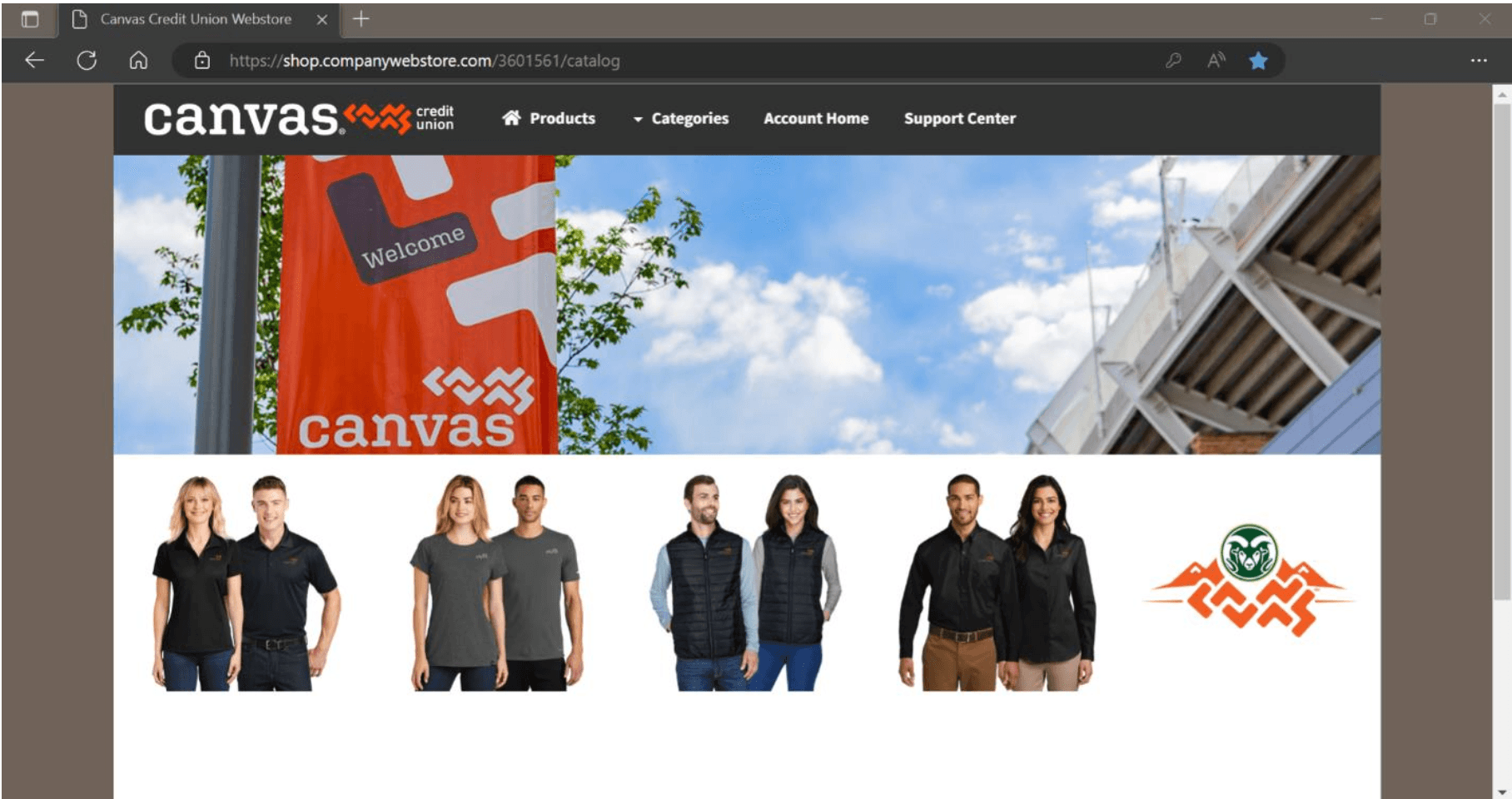
The idea was simple: give Canvas employees a one-stop shop for branded work wear they actually wanted to wear. No more guessing what "business casual" meant. No more mismatched interpretations of the dress code. Just a curated, on-brand wardrobe that let every employee — regardless of body type, style, or preference — show up to work feeling comfortable and confident.
Beyond the practical, the apparel store reflected something bigger about the Canvas brand. Canvas wasn't just a financial institution — it was a Colorado-first lifestyle, built on community and shared values. Putting that identity on the people who represented it every day was an extension of the brand promise itself. When the store launched, it also introduced a new employee benefit: every new hire received store credit to build their work wardrobe from day one.
The Work
V1 — A Promising Start, A Hard Lesson
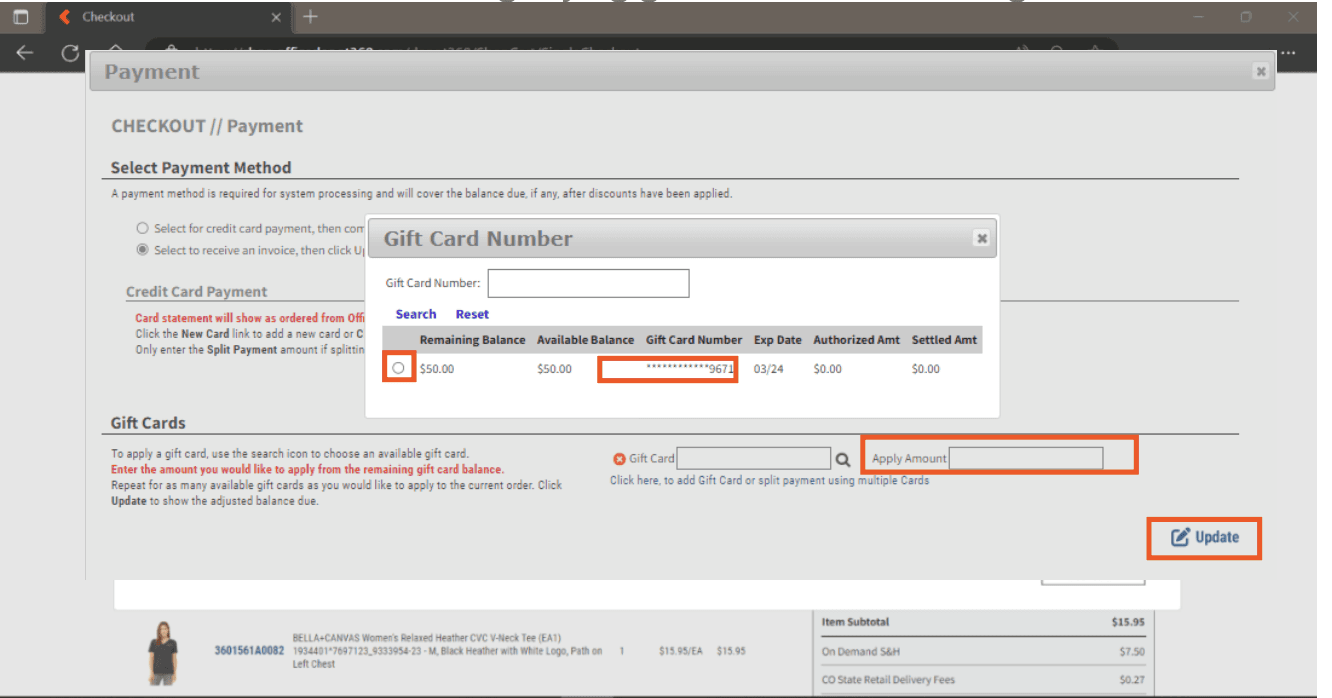
Our first vendor came with strong credentials — the scale, the product range, and the pricing we needed. The pitch was a hands-off, self-managing system we could update at any time. Despite the pitch, things didn't go as planned.
The user experience was riddled with friction. The checkout process was split across two separate systems, a storefront and a standalone purchase portal. If a user spent too long browsing, the portal timed out and their cart disappeared entirely. New hire credit was buried across multiple menus. To place a successful order, employees had to follow a multi-page instruction document just to navigate a store. I spent significant time each day manually troubleshooting orders and fielding support requests to keep things moving.
Billing was worse. The vendor invoiced our accounting team for every single order — individually, even for $0.00 amounts. This flooded our general ledger and created a reconciliation nightmare. Invoice amounts frequently didn't match actual orders due to cart errors on their end. During the week between Christmas and New Year's, just a month after full launch, I found myself building a full reconciliation spreadsheet. I cross-referenced vendor invoices against our internal records in and identified $5,000 in billing discrepancies. I saved the credit union from spending thousands on invoices that had already been reconciled and paid out.
When the vendor raised their renewal contract to $20,000 in 2024, after months of technical failures and billing chaos we walked away. V1 was closed, and we had to take a strong step back even if it meant discontinuing the service again.
But it proved something important: when the site worked, employees loved it. The demand was real, and now we just needed a vendor who could meet it.
V2 — Getting It Right
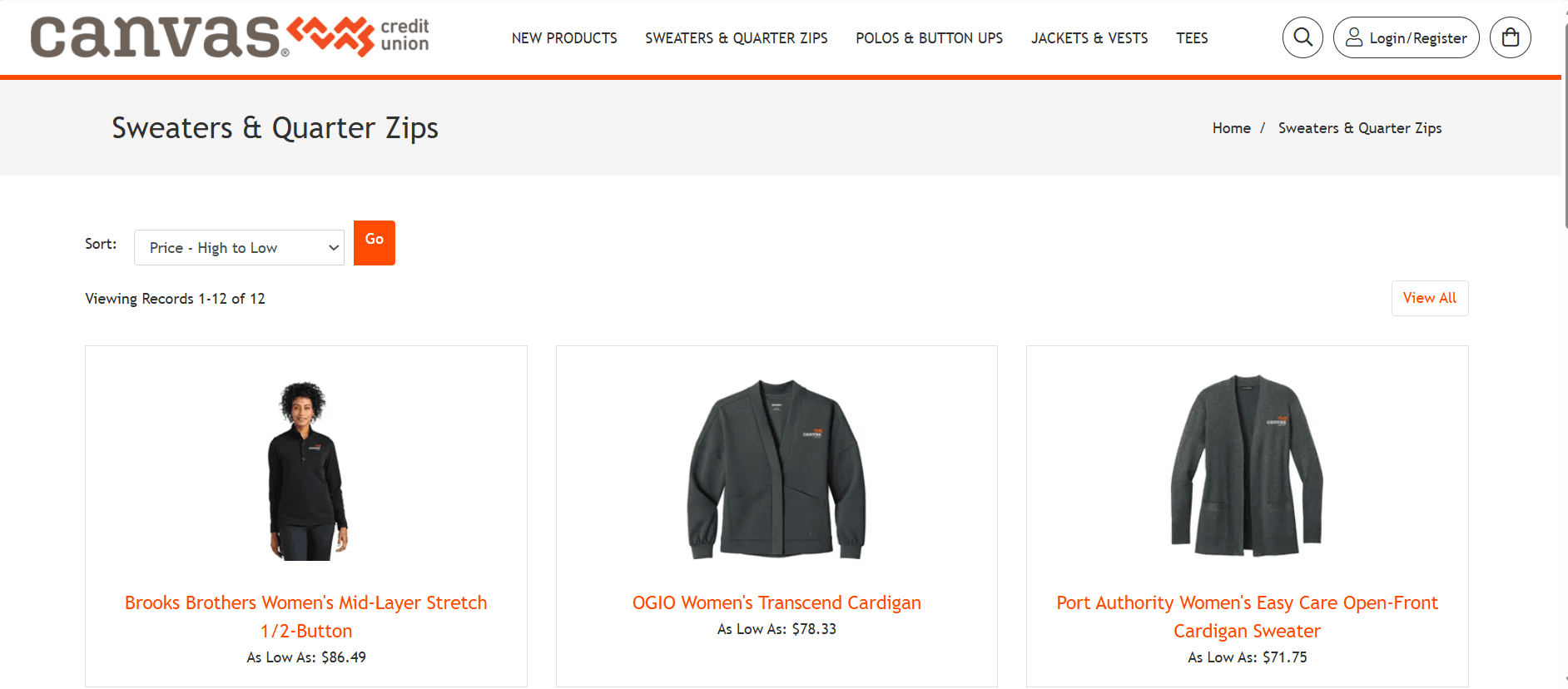
After six months back at the drawing board, we found BeBranded, a local Colorado business with a smaller scale but a fundamentally different approach. Their prices weren't as aggressive, but their willingness to work with us, modify their platform to our needs, and actually show up as a partner made it the right call. Our contract came in at 10% of what our previous vendor had charged.
The new store launched last summer after an 8 month gap. Now, the backend largely manages itself. Billing is clean, shipping is reliable, and the new hire credit process was restructured so credit is only awarded once a new hire confirms they're ready. This eliminated the reconciliation issues we'd had when pre-issued credit went to employees who never started.
It's a small investment with a measurable return: employees feel taken care of from day one, the brand shows up consistently across every branch and team, and it contributes meaningfully to retention and new employee satisfaction.
The Data Layer — Building an Analytics Dashboard
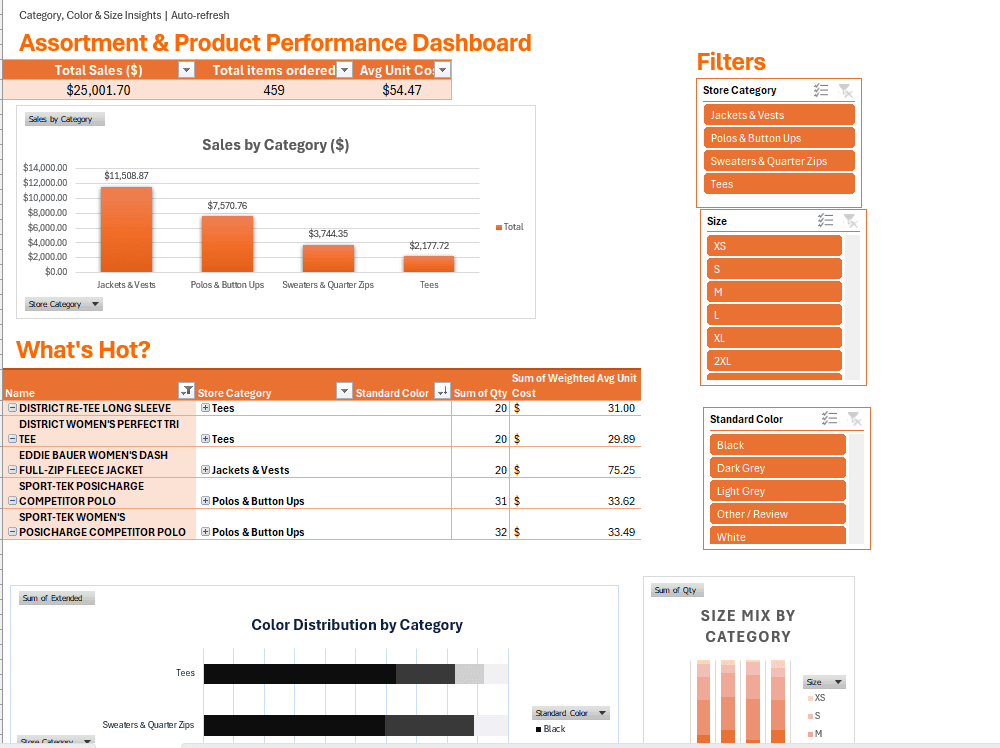
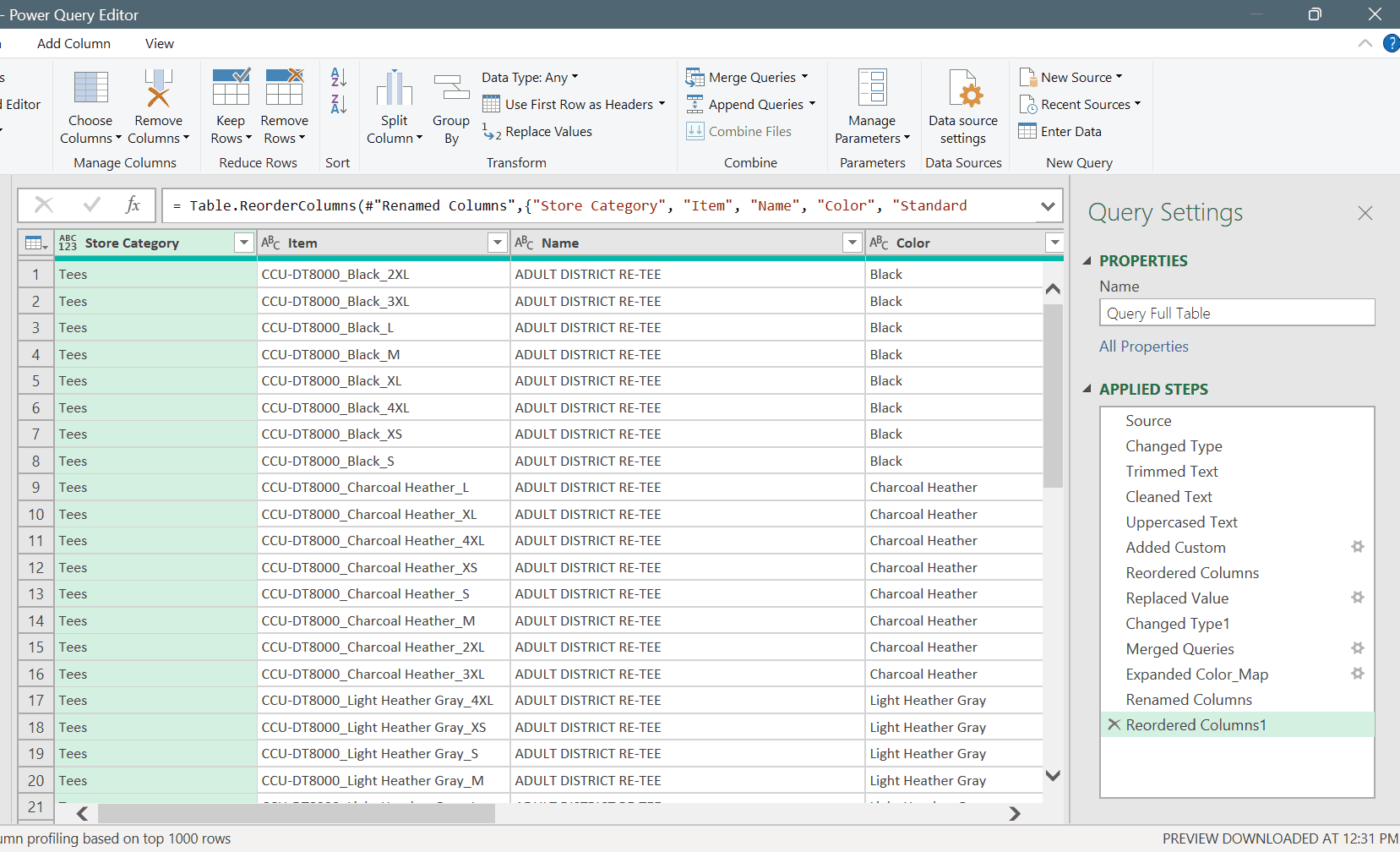
With V2, at the conclusion of 2025, our vendor sent over a raw export of one full calendar year of order data. I saw an opportunity. We were approaching a new inventory selection cycle and needed to make smarter decisions about what to carry, but a flat file of 1,200+ SKUs doesn't tell you anything on its own. Every size variant of every item had its own row, but It wasn't exactly useful information yet.
I took it on myself to turn it into something we could use.
Using Power Query in Excel, I spent roughly six hours over several workdays cleaning, merging, and transforming the raw vendor data. Standardizing color naming conventions, merging product tables, and restructuring the schema until I had a clean, query-ready dataset. From there I built a fully interactive dashboard with live slicers, pivot tables, and charts covering four key questions:
What categories are driving revenue? (Sales by Category)
What specific items are employees actually buying? (What's Hot table)
What colors are people gravitating toward — and which are being ignored? (Color Distribution by Category)
How are sizes distributed across the catalog? (Size Mix by Category)
The findings directly shaped our next inventory decisions. Employees gravitated toward athleisure-style compositions, and mixed cotton-poly blends that were comfortable, stretchy, and durable enough for daily wear. We identified a clear price range sweet spot that told us where to focus and where we were over-investing. Items that consistently underperformed were flagged for removal. And the visual format made it easy to walk leadership through the story. I was able to tell my stakeholders about more than just what people bought, but also why certain items resonated.
I communicated real proof behind our inventory strategy and giving our dollars a direction.
What I Learned
This project taught me that launching something imperfect is sometimes the right move, as long as you're honest about what it is and committed to making it better. V1 was one important step. It proved the concept, surfaced the real problems, and gave us the data we needed to build something that actually worked.
I also learned that vendor relationships are brand relationships. How a partner shows up, in their communication, their accountability, and their willingness to fix problems reflects directly on your organization. Choosing BeBranded wasn't just a cost decision but it was also a values decision.
I had to champion this project even when our original solution was not all we wanted it to be. We launched, saw the proof, and then improved. Even when executives casted doubt on the effectiveness of the project, when we closed the store to make it better many commented about how much they missed the service. Now, back with V2 up and running I can say that I am proud of the result and am better for sticking with it. Had we never launched V1, I doubt we would have been able to deliver the experience we have now.
Other projects

"Off the Cuff" Podcast
Breaking Down Barriers to Faculty Mentorship Through Long-Form Audio Storytelling
Pronoia Group — Bilingual Web Design & Brand Refresh
From Formality to Function — Rebuilding a Brand's Digital Voice in Two Languages

Aqua Nova Skin Solutions — Brand Identity & Launch
From Blank Page to Booked Solid

Typeform — Organizational Innovation at Canvas Credit Union
Modernizing Canvas's Form Experience
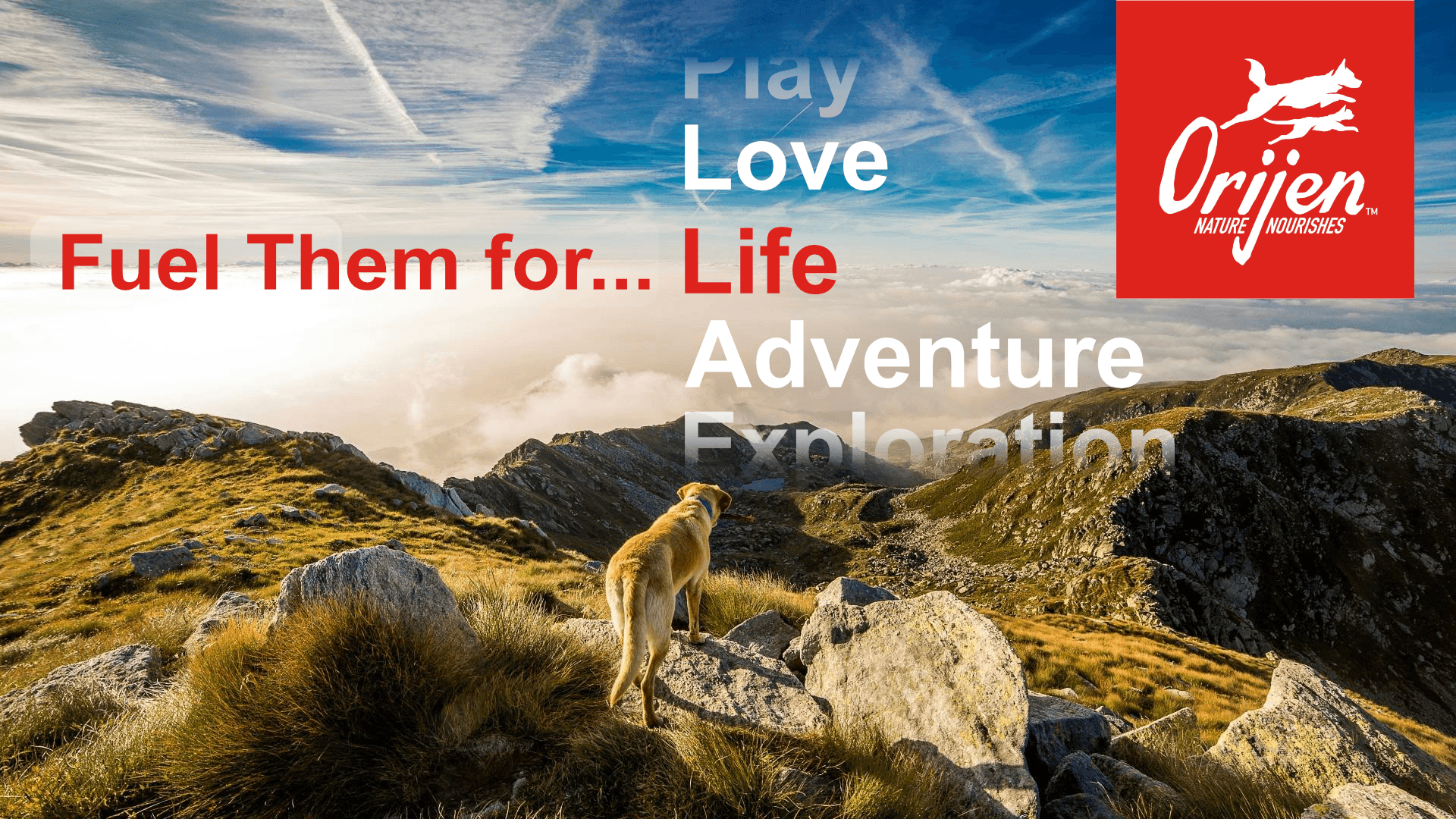
"Fuel Them For..." — An ORIJEN Brand Awareness Campaign
A three-week sprint to reposition a premium pet food brand for the outdoor generation

Creative Sprint: "LUCID" - A Short Film by Andrew Perper
Helping to Bring Andrew's Vision to Life

Advertising Project: Maybelline New York IMC Response Campaign "The city doesn't wait and neither does she"
Challenging Ephemeral Virality with Heritage, High Performance, and Human-AI Workflows
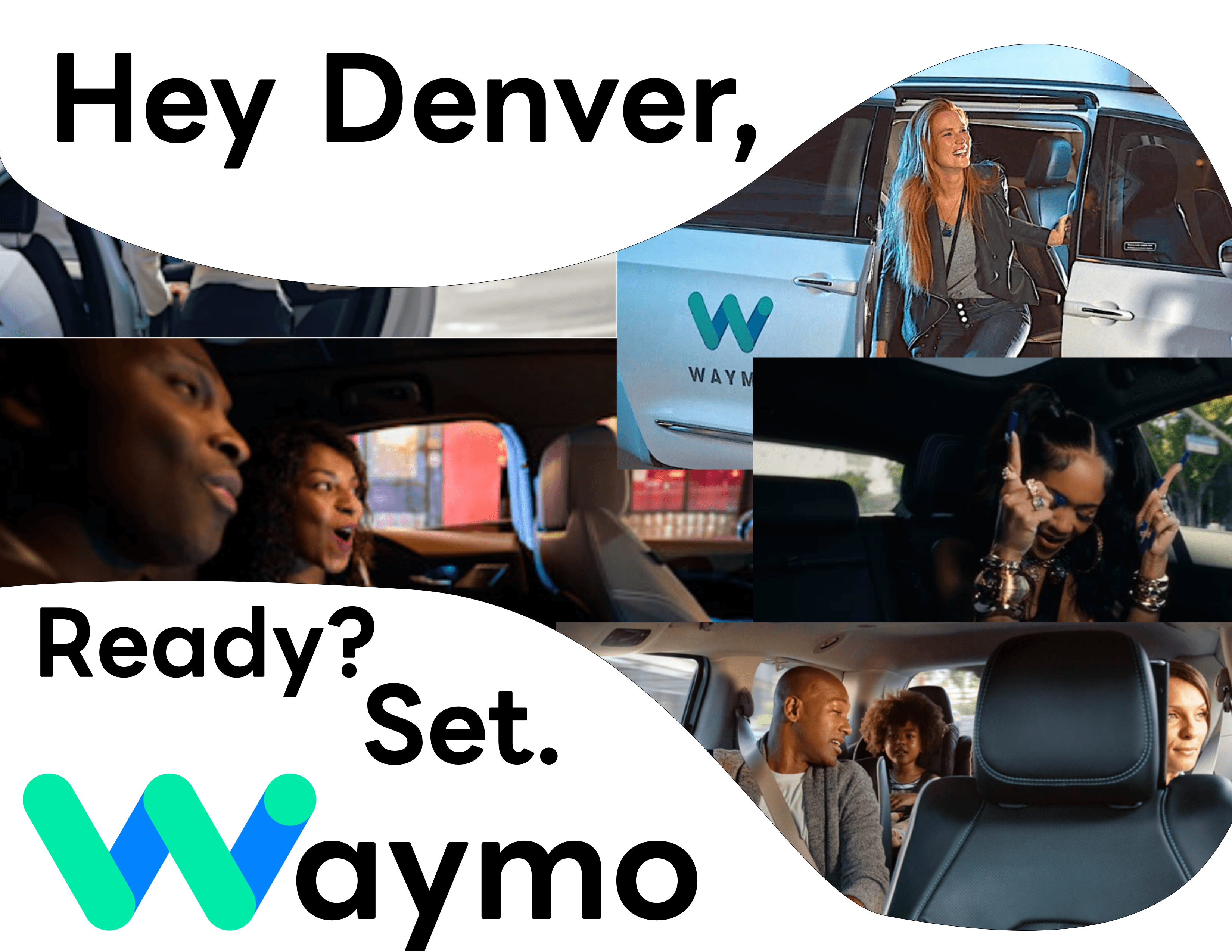
Advertising Project: WAYMO's Denver Launch IMC Campaign
Reframing the Autonomous Ride from Tech Novelty to Daily Sanctuary

New Product Development Project: Strava Mate
From Metric Tracking to Movement Crews: Productizing Social Connection on Strava